News Gemini
Gemini 4 Argon is here: access and benchmarks against Astra and Opus
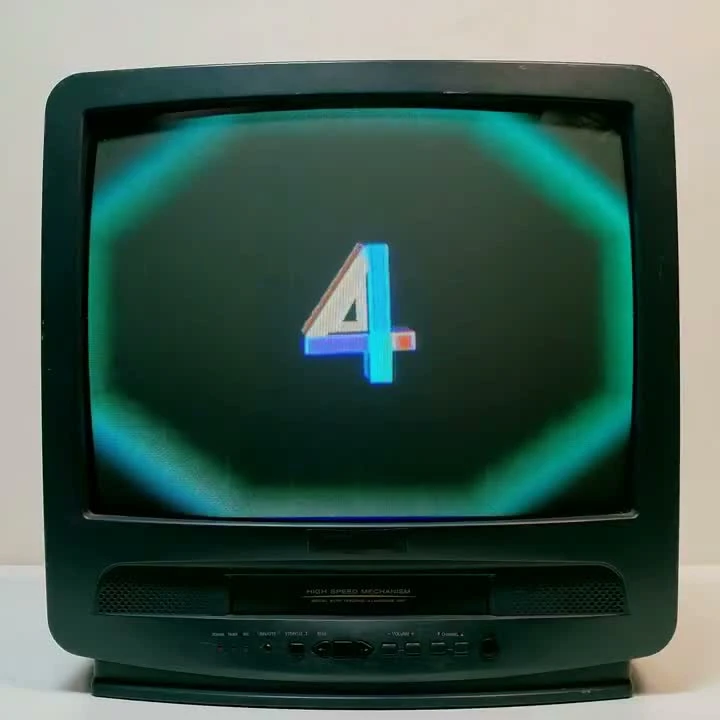
Gemini 4 Argon is now globally available, with access depending on the product and plan. Sundar Pichai, CEO of Google and Alphabet, confirmed it on X on October 13, shortly after posting a video of a television showing a four.
The news now is what you can use and how it compares. In Google’s published figures, Argon scores above GPT-6 Astra, Claude Fable 5.1 and Claude Opus 5.5 on some tasks. On others, Astra or Opus leads. That difference matters more than finding one winner for everything.
Where you can use Gemini 4 Argon
Today’s official announcement lists:
- Gemini app and AI Mode in Search: access for Google AI Pro and Ultra subscribers.
- Google Antigravity: access for Ultra subscribers.
- Developers and enterprises: paid access through the Gemini API and Gemini platform.
Check what your account has enabled. Announced access for one product doesn’t imply the same access elsewhere. Global availability is Google’s statement; we haven’t checked every account or region.
Argon versus Astra, Fable and Opus: compare by task
This selection covers six benchmarks from Google DeepMind’s official table, verified on October 13. All show percentage scores: higher is better within that benchmark. The “Leading” label refers only to the four models shown.
Choose the task. Compare the models.
AutomationBench
Higher is betterCompleting business workflows from start to finish. Score, %.
- Gemini 4 ArgonLeading
- 51.3%
- GPT-6 Astra
- 41.4%
- Claude Fable 5.1
- 31.4%
- Claude Opus 5.5
- 42.5%
Argon scores 8.8 percentage points above Opus 5.5 on this evaluation.
DeepSWE v1.1
Higher is betterLong-horizon software engineering tasks. Score, %.
- Gemini 4 ArgonLeading
- 77.9%
- GPT-6 Astra
- 74.1%
- Claude Fable 5.1
- 67.4%
- Claude Opus 5.5
- 74.2%
Argon leads the four models in Google's table. The gap to Opus 5.5 is 3.7 points.
Terminal-Bench 4.0
Higher is betterAgent tasks in a terminal. Score, %.
- Gemini 4 Argon
- 57.4%
- GPT-6 Astra
- 58.2%
- Claude Fable 5.1
- 57.9%
- Claude Opus 5.5Leading
- 66.4%
Opus 5.5 leads here. Argon trails by 9 points. A model can lead one benchmark and trail another.
FrontierSWE v2
Higher is betterA separate software engineering evaluation. Score, %.
- Gemini 4 Argon
- 55.0%
- GPT-6 AstraLeading
- 65.5%
- Claude Fable 5.1
- 56.3%
- Claude Opus 5.5
- 62.3%
Astra has the highest score in this group. This qualifies Argon's lead on DeepSWE.
LVBench
Higher is betterLong-video understanding. Score, %.
- Gemini 4 ArgonLeading
- 91.7%
- GPT-6 Astra
- 87.5%
- Claude Fable 5.1
- 79.7%
- Claude Opus 5.5
- 83.7%
Google uses 1 frame per second for Gemini, 800 frames for Astra, 300 for Fable and 600 for Opus due to API limits. Measures understanding, not video generation.
CWE-bench v1
Higher is betterRemediating software vulnerabilities. Score, %.
- Gemini 4 ArgonLeading
- 68.0%
- GPT-6 AstraLeading
- 68.0%
- Claude Fable 5.1
- 58.0%
- Claude Opus 5.5
- 67.0%
Argon and Astra tie at 68%. This test measures vulnerability remediation, rather than all cybersecurity tasks.
View the six-benchmark table
| Benchmark | Gemini 4 Argon | GPT-6 Astra | Claude Fable 5.1 | Claude Opus 5.5 |
|---|---|---|---|---|
| AutomationBench | 51.3% | 41.4% | 31.4% | 42.5% |
| DeepSWE v1.1 | 77.9% | 74.1% | 67.4% | 74.2% |
| Terminal-Bench 4.0 | 57.4% | 58.2% | 57.9% | 66.4% |
| FrontierSWE v2 | 55.0% | 65.5% | 56.3% | 62.3% |
| LVBench | 91.7% | 87.5% | 79.7% | 83.7% |
| CWE-bench v1 | 68.0% | 68.0% | 58.0% | 67.0% |
The quick reading: Argon scores 51.3% on AutomationBench and 77.9% on DeepSWE v1.1. Against Opus 5.5, those are gaps of 8.8 and 3.7 percentage points, respectively.
The order changes with the task. Opus 5.5 reaches 66.4% on Terminal-Bench 4.0, against Argon’s 57.4%. Astra reaches 65.5% on FrontierSWE v2, against Argon’s 55.0%. On CWE-bench v1, Argon and Astra tie at 68.0%.
These are published results, not tests conducted by HeyMark. A coding score also doesn’t tell you how each model will write in your brand’s voice.
The conditions behind the scores
Google’s methodology generally uses a single attempt and the highest available reasoning settings, with documented exceptions. The table combines Google-computed evaluations with provider figures or public leaderboards; it isn’t an identical run of every model in our environment.
Inputs also differ on LVBench: Gemini receives one frame per second; Astra, 800 frames; Fable, 300; and Opus, 600, because of API limits. Argon’s 91.7% measures video understanding, not video generation.
To choose a model, start with the task you need to complete. Then check its output using your materials, the tools involved and the cost of the run.
From television to announcement: the two original posts
Pichai posted the teaser at 15:45:25 UTC. The roughly 29-second video shows a hand changing channels, the four and different scenes before a final G. The post arrived without an explanation.
Copy of the original video, with its audio and edit.
18 minutes and 45 seconds later, at 16:04:10 UTC, his second post announces Argon and details access. It comes with a roughly 51-second video showing objects, people and graphic representations.
Sundar Pichai’s original post · announcement
Gemini 4 Argon is here.
Copy of the original video, with its audio and edit.
The videos are Google’s promotional material. They show how it presents the model; the benchmarks and methodology let you examine specific results.
Our coverage of the initial announcement retains the September 30 context, when access started with evaluators and cybersecurity defenders. Today’s change is the announced opening across the products and plans listed above.
Sources verified on October 13, 2026. X timestamps shown in UTC; the Spanish edition uses America/Santiago (UTC−3). Figures are Google’s published results, rather than a HeyMark evaluation.
Source
Google · Gemini 4 Argon: Built to solve your hardest problems
Plan your next post in HeyMark.
Keep the idea, review the draft with your team, and see how it performed in the accounts you connected.