News Google Flow Music
Flow Music lets users export instruments and effects as audio plugins
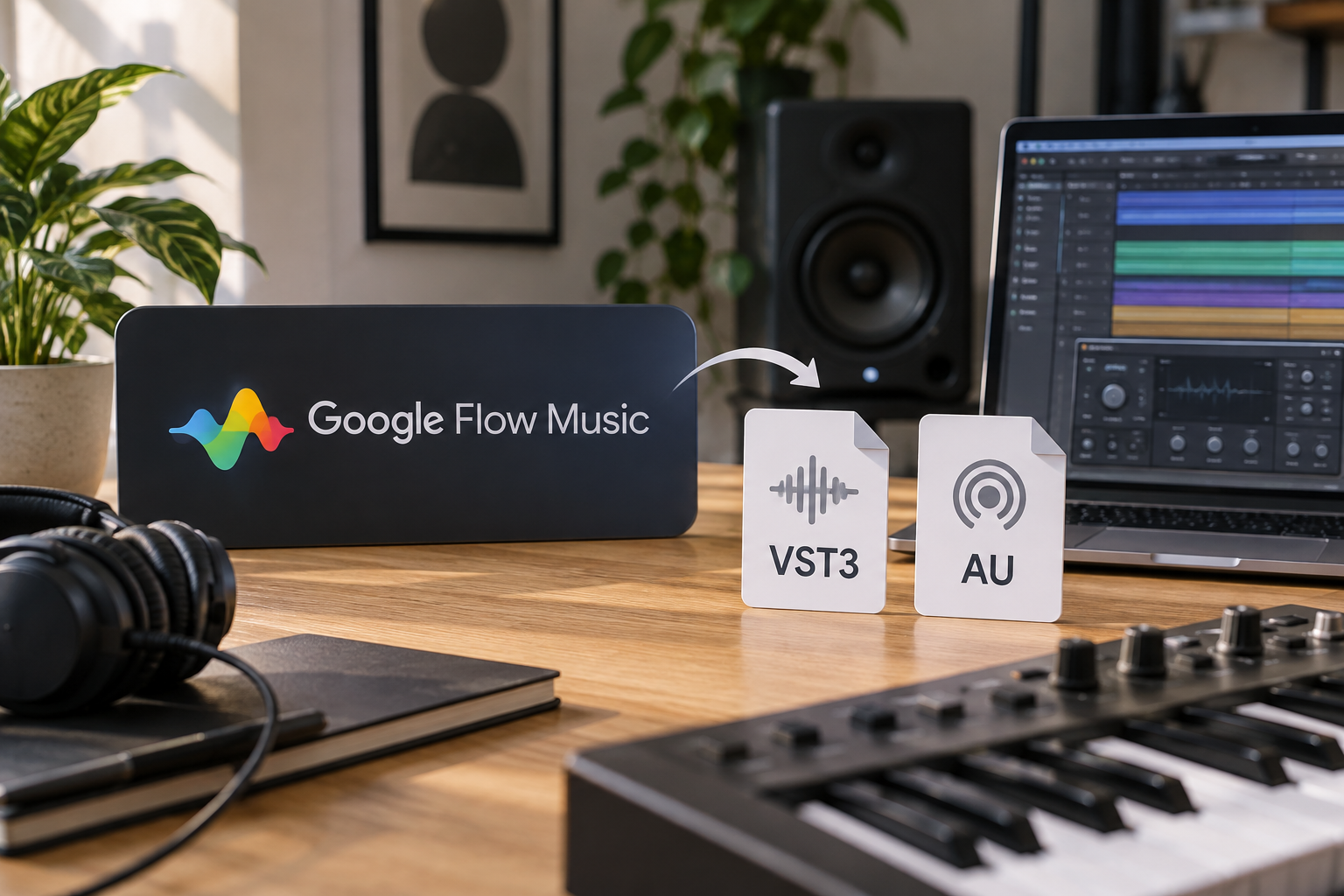
On October 6, 2026, Google announced that Flow Music users can export custom instruments and effects as VST3/AU plugins for digital audio workstations. Google’s post describes resources created in Flow Music using natural language. For brand teams producing audio, the news may be useful during the creation stage; it does not announce a tool for publishing social media content or measuring campaigns.
What does exporting let users do?
According to Google, users can export custom instruments or effects created in Flow Music as VST3/AU plugins. The idea is to bring those resources into digital audio workstations and use them in a music production workflow. This means the result is not limited to being created within Flow Music: the announcement describes an output for use in common audio production tools.
For marketers, the key point is this continuity between creation and production. A collaborator working on music, effects, or sonic identity can assess whether a generated instrument or effect could be used in a branded audio piece. However, the update does not confirm that every result is campaign-ready or eliminates the need for editing, review, or team approval.
Which formats and tools are mentioned?
The formats listed are VST3 and AU, and the intended destination is digital audio workstations, according to the official announcement. This information makes it possible to ask a specific question: which audio environment the team or its vendor uses, and whether the exported plugin fits that workflow. The available research does not provide a cost, detailed technical requirements, or a separate availability date, so those points should not be treated as settled.
Nor should the news be turned into a claim about the ability to publish or distribute audio. Flow Music offers a capability related to sound production; the announcement does not introduce a feature for social media scheduling, campaign management, or marketing metrics reporting.
What could a brand use it for?
The opportunity is adjacent and depends on whether the brand has an audio production need. A team could explore whether custom instruments or effects fit a jingle, a short piece, or an audio asset it is already developing. Practical value will depend on compatibility with the editing process and the team’s creative decisions; exporting a plugin should not be assumed to mean having a finished, approved piece.
Google describes the export feature and formats in its announcement, but HeyMark has not yet tested this feature. An initial evaluation should therefore involve the people who produce or edit the audio, rather than assuming the social team can handle production requirements from a publishing tool.
What can the social team do with this update?
If the content team decides to support an audio piece with posts, it can coordinate the schedule, materials, and reviews with the people responsible for production. HeyMark can be used to plan and publish content on supported social networks, collaborate with the team, and review messages and performance; it does not create or export audio plugins.
This distinction helps assign responsibilities: production validates the audio asset’s compatibility and quality, while the social team prepares appropriate posts for its channels. To turn a visual or audio idea into organized social content, see the guide to creating carousels with ChatGPT and HeyMark.
Source
Plan your next post in HeyMark.
Keep the idea, review the draft with your team, and see how it performed in the accounts you connected.