News OpenAI
OpenAI publishes a practical guide to working with GPT‑6
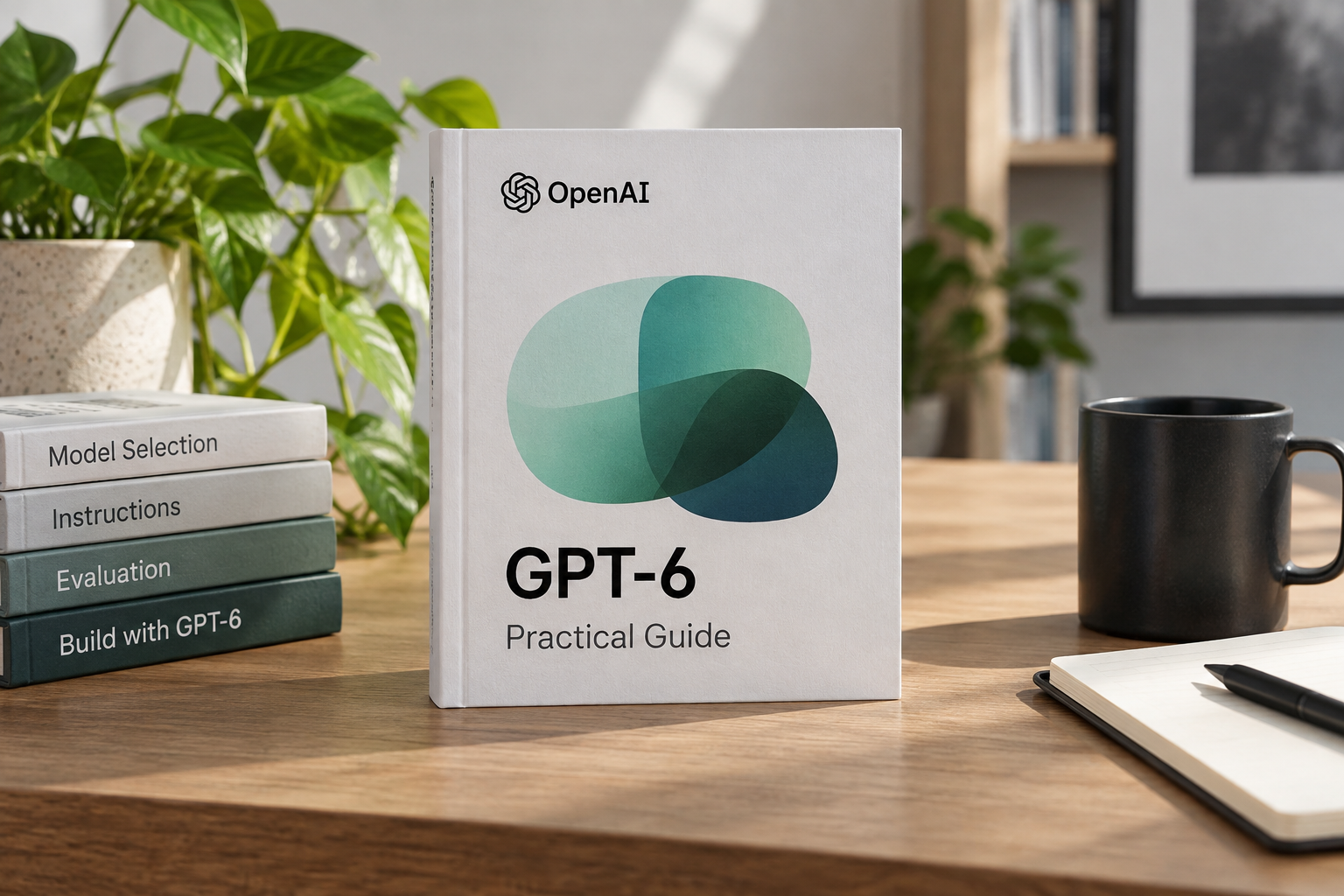
On October 2, 2026, OpenAI published a practical guide to building with the GPT‑6 family, with recommendations for choosing a model based on the task and evaluating its performance. (OpenAI guide)
What does the GPT‑6 guide recommend?
The guide organizes the work around practical decisions: selecting the model that fits the task, setting clear instructions, and defining the expected result. It also recommends evaluating the work using measures such as success, latency, and cost per completed task. (OpenAI guide)
For a social media and content team, the value lies in treating a task as a workflow that can be described and reviewed, rather than evaluating a tool solely on the impression it makes in a one-off test. For example, a team could examine whether a repeatable process produces structured summaries the team considers useful. That example is a possible application of the method, not a capability or result that OpenAI guarantees in that case.
What changes for content teams?
The publication is a working guide, not an announcement of a new social media publishing feature. Its connection to brand work is indirect but practical: it helps teams design tests with a defined objective and consider more than one evaluation criterion. (OpenAI guide)
A team could adapt that approach to recurring analysis or content-preparation tasks. First, decide what needs to be solved; then specify the instructions and output format; finally, check whether the result meets the objective and how long and how much it takes to complete the task. The guide recommends considering cost per completed task, but the information reviewed does not provide a specific rate that we can apply to each team. (OpenAI guide)
How can you turn the recommendations into a test?
A small, clearly defined test makes it possible to examine the workflow before relying on it in production. The team can:
- Choose a recurring, well-scoped task, such as turning information into a summary with a set structure.
- Write down the instructions and specify what an acceptable response must contain.
- Review each result using the same success criterion.
- Record turnaround time and cost per completed task, along with the results.
- Decide whether it is worth adjusting the instructions or continuing to test.
These steps turn OpenAI’s recommendations on model selection, instructions, expected results, and measurement into a team exercise. (OpenAI guide) They do not replace an evaluation of your own: results will depend on the task and how the test is conducted.
When can you access it, and how much does it cost?
The guide is dated October 2, 2026. It does not announce a new GPT‑6 availability date, so it is worth distinguishing the guide’s publication date from any claims about access. (OpenAI guide) It also does not specify a price that would allow a team to calculate the cost of a test; the recommendation described is to measure that cost per completed task.
Therefore, before planning a test, the team should confirm through its access channels what options are available and what cost applies to its situation. We do not assume that every team can access the models or that a test will save time or money.
What should you test in marketing?
Start with a task whose result is easy to review, rather than delegating an entire editorial process. Define what makes the result useful to the team and compare that assessment with the recorded time and cost. OpenAI’s guide provides a general framework for designing that evaluation, but HeyMark has not yet tested GPT‑6 or the workflows described. (OpenAI guide)
Afterward, the team can use HeyMark to plan and publish content on supported social networks, collaborate, and review messages and performance; this does not mean that HeyMark runs model tests. To explore how to connect an assistant to editorial work, see HeyMark’s guide to connecting Claude to HeyMark.
Source
Plan your next post in HeyMark.
Keep the idea, review the draft with your team, and see how it performed in the accounts you connected.