News Google DeepMind
Genie 4: Google shows worlds you can explore and change in real time
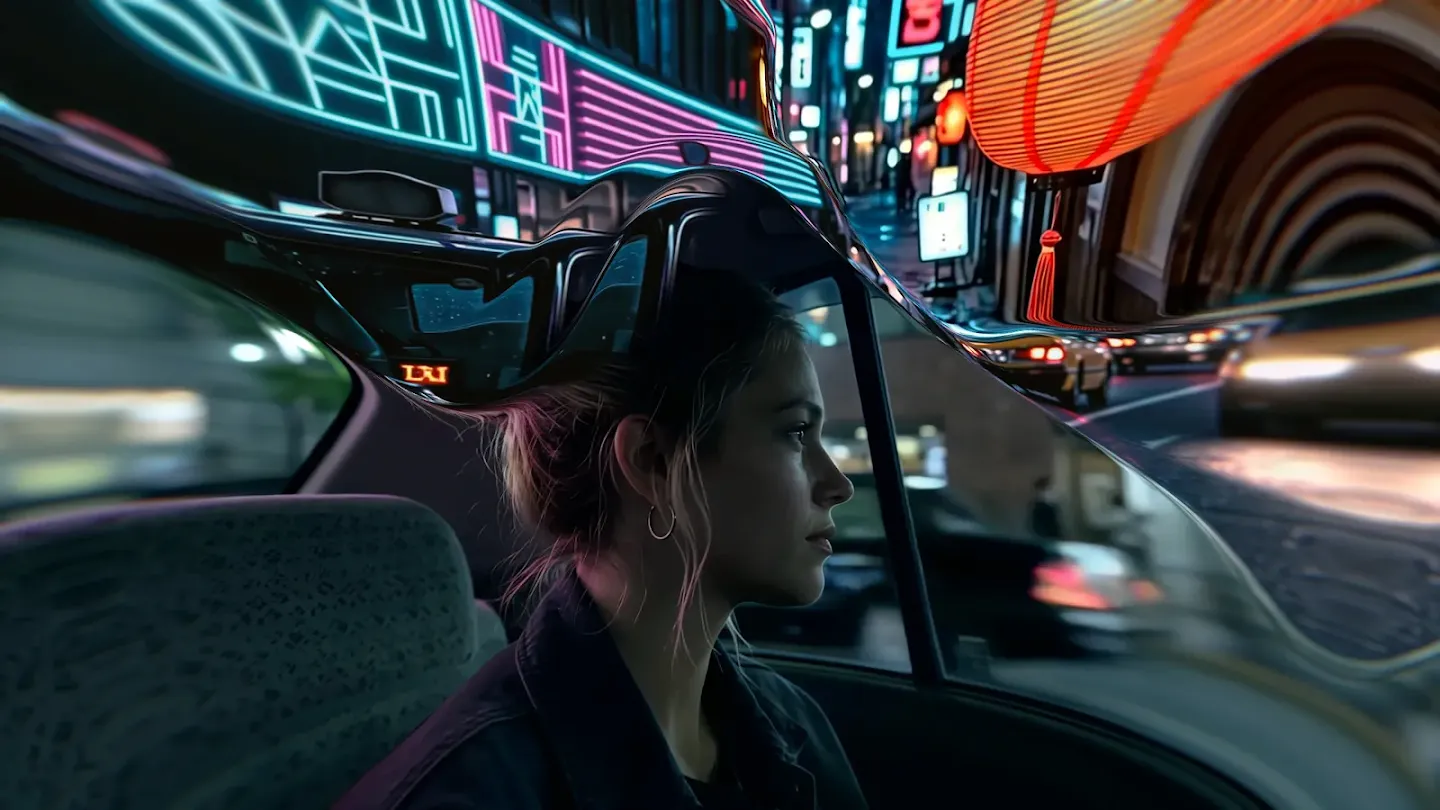
Official animated presentation and visual material from Google DeepMind. Adapted to HeyMark’s page format.
Approach a saxophone player, ask for a whale, then change the weather: that sequence appears in a Genie 4 recording Google DeepMind published on October 27. The camera keeps exploring as new instructions arrive. The model also generates the sounds of the surroundings and its characters. The official announcement presents that combination as the next step in its interactive-world research.
The demo raises a specific question: how much can you change inside a generated world before it stops feeling like the same place? These recordings show examples Google selected; initial access remains limited to trusted testers.
What is Genie 4, and what can you change live?
Genie 4 is a world model: it generates an audiovisual environment that responds to navigation and new instructions. In the published demonstrations, a user steers the camera with keyboard controls and types changes into the scene. Google shows weather changes, added characters and events that evolve during exploration. Its model page explains the interaction.
There is a further part to that continuity. According to DeepMind, Gemini Omni contributes visual appearance and behavior, while other Gemini models interpret instructions and help plan how the simulation should continue. The output is generated as the scene develops. That lets someone explore an idea from different viewpoints and observe what follows an intervention.
Audio is generated too: ambient sound, music and dialogue, according to the announcement. For creators, this suggests a way to explore a scene’s movement and sound before deciding what to produce. That is a creative possibility; the demos do not establish time savings or how often you would get a usable result.
Three official demos worth examining
Choose a scene. Each recording retains Google’s on-screen controls and disclaimer; you can play it, listen and scrub through it. Below each example, we explain the initial description and what to watch for.
The same scene, new instructions
36 sThe camera moves toward a saxophone player above the water. A whale appears and snow begins during the recording. Changes enter the scene while the camera keeps exploring it.
Prompt summary The initial description calls for a platform on a lake with a saxophone player, a glowing sphere, vegetation and mist; it also requests water, wind and saxophone sounds. This is an editorial summary of Google’s published prompt.
What to watch Watch what stays consistent when the weather changes and the camera approaches the character. Turn on sound in the player to hear the demonstration.
Recording selected and shortened by Google; compressed web copy. The poster frame is output, not an input image.
Source: Google DeepMindA watermelon in a courtyard
9 sGoogle uses this short scene to demonstrate object simulation and motion. The recording retains the provider’s controls and disclaimer.
Prompt summary The described setting is a sunny courtyard with a stone plinth, a garden and droplets in the air. The initial object is a whole watermelon on the plinth. Editorial summary of the official prompt.
What to watch Watch the object’s continuity and interaction with its surroundings. A selected sequence does not measure the model’s general physical accuracy.
Recording selected and shortened by Google; compressed web copy. The poster frame is output, not an input image.
Source: Google DeepMindFabric, wind and a moving camera
17 sA long pink fabric runs through a meadow, moving in the wind. The example lets you examine camera movement, folds and the landscape together.
Prompt summary The description places pink satin fabric among grass and flowers, with hills in the distance and wind moving the cloth. Editorial summary of Google’s published prompt.
What to watch Follow the folds and points where the fabric meets the ground throughout the sequence, beyond its first frame.
Recording selected and shortened by Google; compressed web copy. The poster frame is output, not an input image.
Source: Google DeepMindThese are recordings selected and shortened by Google, rather than Genie 4 running inside HeyMark. We compressed the web copies. Posters are frames from the output; we do not present them as input reference images, whose separate association we could not verify.
What changes from Genie 3?
Real-time exploration and text-driven changes already appeared in the August 2025 Genie 3 announcement. Genie 4’s interest lies in how Google extends that experience: native audio, more natural character movement and more realistic visual simulation, according to the company.
The evidence needs to be compared on equal terms. The historical Genie 3 announcement published parameters such as resolution and frame rate. The Genie 4 sources reviewed here describe capabilities and show examples, without an equivalent table that quantifies the improvement. We therefore do not carry over the previous model’s figures or turn these recordings into performance scores.
Who can access Genie 4?
The official model page separates initial access from what comes next:
| Audience | Announced status |
|---|---|
| Google’s trusted testers | Research preview rolling out |
| Google AI Ultra subscribers | Coming soon in Project Genie |
| Gemini API and Google AI Studio early-access partners | Planned as part of the wider rollout |
An AI Ultra subscription does not establish that you already have Genie 4 access. Google links a waitlist from its page, which is the available route to request access updates. The announcement and model page reviewed here also do not publish a Genie 4 generation or API rate. A subscription fee and the cost of running a simulation are separate figures.
What still breaks?
Google acknowledges that visual details and object permanence can drift, particularly during longer sessions, navigation or multiple complex edits. Interactions involving several agents, accurate real-world locations, legible text and audio accuracy remain research challenges. The model page describes a few minutes of continuous interaction, rather than extended sessions. Published limitations.
That matters when evaluating a demo: a convincing camera journey does not establish that every object retains its state or that physical rules behave reliably. If you want to design an experience, continuity and control matter alongside its appearance.
The interesting change here is the ability to direct a scene while exploring it, with sound generated alongside the visuals. Wider access will let people assess something more demanding: preserving characters, objects and scene changes throughout an exploration of their own.
Google DeepMind’s original announcement
Original Google DeepMind post on X, October 27, 2026. The video introduces interactive worlds, audio and character movement.
Source
Google DeepMind: Genie 4, a new generation of world simulation
Plan your next post in HeyMark.
Keep the idea, review the draft with your team, and see how it performed in the accounts you connected.