Blog
Search intent: meaning, types and examples
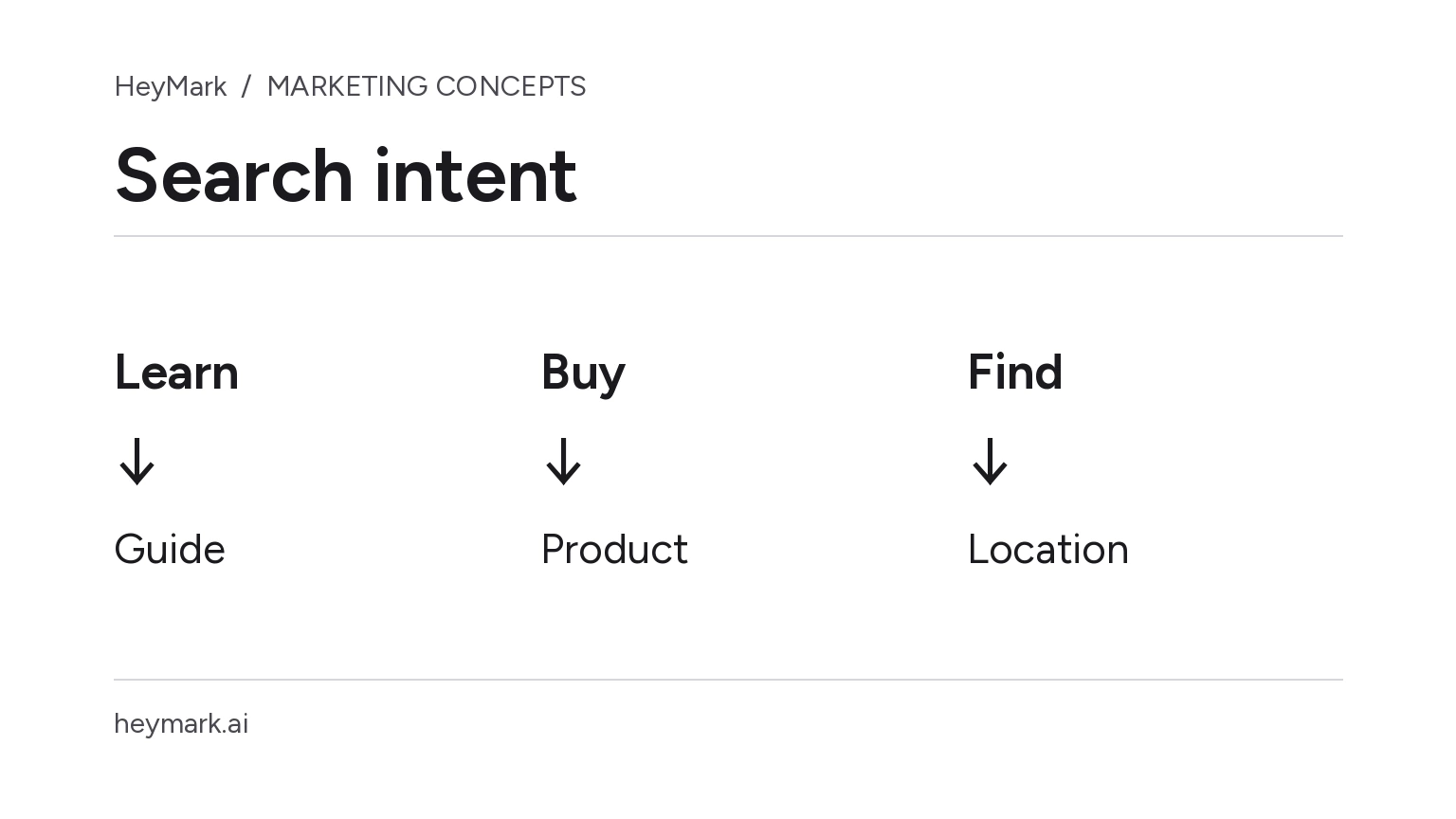
Search intent is the need a person is likely trying to meet with a query. You cannot read someone’s mind from a few words; the phrasing, context, and results can help you form a hypothesis. The practical use is choosing which page will best address that need.
Four categories are useful as a guide. An informational search aims to learn something (“how to store ground coffee”). A navigational search tries to reach a site or brand (“Bruma Coffee”). A commercial search compares options before a decision (“best coffee for a French press”). A transactional search signals an action, such as buying (“buy medium roast ground coffee”). These are working labels, not rigid boxes: someone may research and buy during the same session.
From query to a specific page
Imagine a small coffee shop that sells bags of coffee and serves customers at a physical location. Before publishing new pages, write down three queries that describe things it actually offers:
- “how to store ground coffee”: the likely need is learning how to keep it fresh. A short guide may fit if it offers specific advice.
- “buy medium roast ground coffee”: the person may want to find and purchase that product. The product page should show format, price, availability, and how to buy.
- “Bruma Coffee hours”: the person may want directions or current opening times. The location page should show its address and up-to-date hours.
These matches suggest a response; they do not prove what every searcher wants. Before creating a URL, review the results for the query and the country or language that matters to you. Notice whether guides, product pages, maps, or brand pages dominate. That can hint at which formats seem relevant in that context; results change and do not guarantee a page will rank.
Compare the options with pages you already have, too. If an existing guide answers a related query well, updating it may be more useful than creating another URL with nearly identical content. A FAQ does not need its own page just because a question appears in a list. A short answer may belong on the product or location page. Create a separate page when a distinct need deserves complete content that people can find easily.
When a query is ambiguous
“Bruma Coffee” could be navigational if someone wants to reach that shop. If the same name refers to a product, a place, or another business, the phrase alone cannot tell you which. Review the query context, location, and observed results; avoid assigning one category with certainty to everyone.
Google recommends creating helpful, people-first content and asks creators to assess whether a page is original, complete, and satisfying.
Keep the final map editable: query, likely need, chosen URL, and reason. Revisit it when your products, location, or actual customer queries change. To compare organic search work with search ads, continue with SEO vs SEM.
Sources
- Creating helpful, reliable, people-first content: self-assessment questions about quality, originality, and reader satisfaction.
- SEO Starter Guide: explains how to help search engines understand content and says indexing or rankings are not guaranteed.
Plan your next post in HeyMark.
Keep the idea, review the draft with your team, and see how it performed in the accounts you connected.