Blog
SEO vs SEM: differences and how to choose
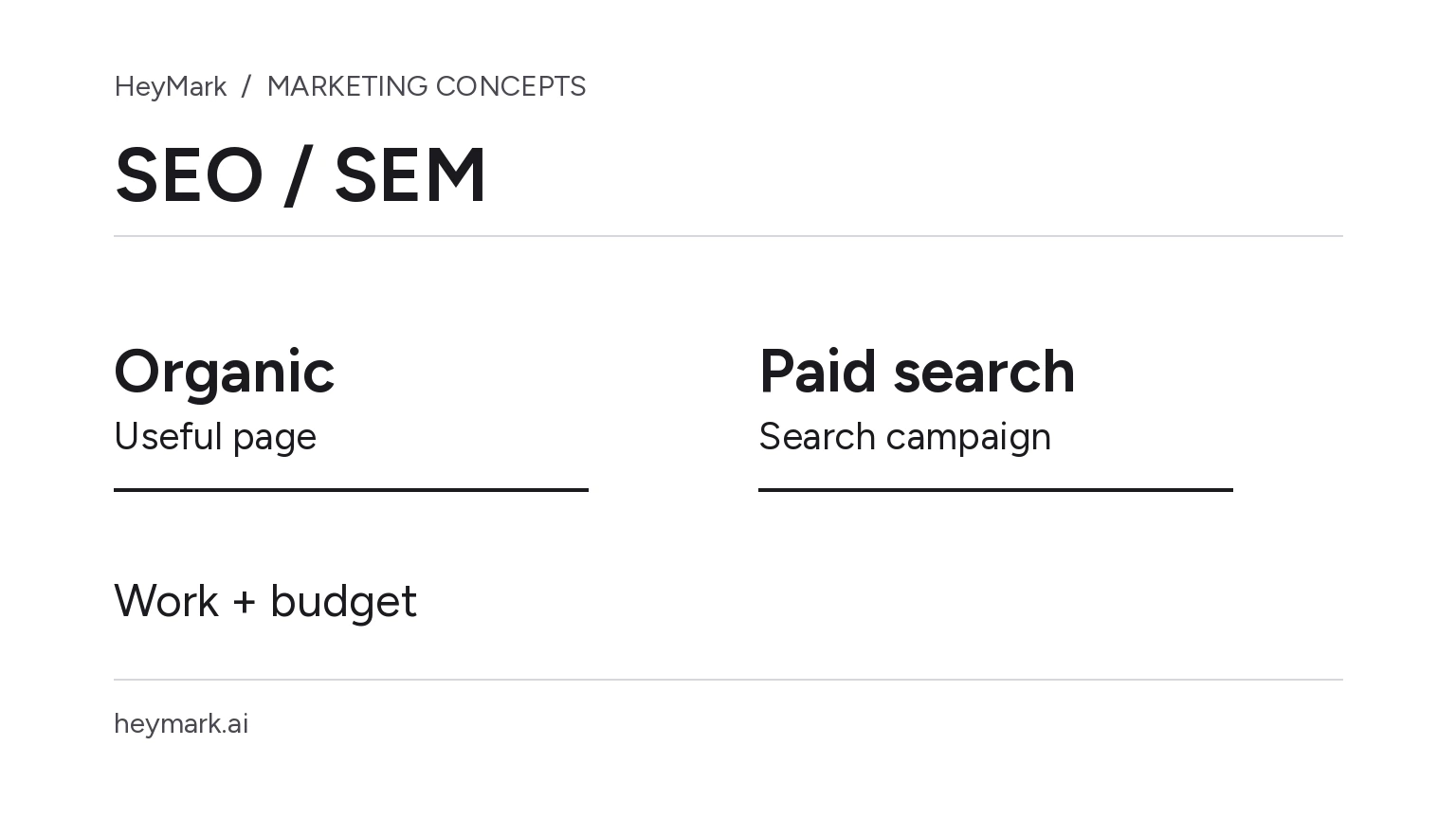
SEO stands for search engine optimization: work that helps search engines discover and understand a website’s pages in organic search results. SEM stands for search engine marketing. It is often used to mean search engine marketing broadly, though many people use it to mean paid search ads alone. Before choosing between them, clarify what SEM means in the conversation and separate organic work from buying ads.
Google describes an organic result as a listing that appears because it is relevant to a search, while paid ads are labeled as sponsored. Paying for a campaign does not buy an organic position. SEO is not free in terms of effort: researching queries, improving pages, fixing technical issues, and keeping information current take time or budget. Neither channel guarantees visits or sales.
A repair shop with a near-term event
Imagine a bicycle repair shop hosting a free inspection day three weeks from now. It also offers tune-ups and repairs year-round. The shop has an old page with incorrect hours and a small budget to promote the event.
For the upcoming date, it can first fix the page with the address, event date, what the inspection includes, and how to book. Then it could test search ads with a spending cap, aimed at relevant local queries. Before spending, the team needs to check that the booking form works and decide how it will identify a booking associated with the campaign. An ad can provide visibility while it runs, but it cannot ensure anyone books.
For the ongoing service, the shop can improve a page that explains which repairs it handles, typical turnaround by repair type, and how to request an assessment. It can also link to that page from relevant parts of the site and describe services in language customers use. Google recommends making content easier for search engines to understand; it does not promise a particular position. Progress can take time and depends on factors the shop cannot control.
How to allocate the effort
A campaign has direct advertising costs as well as setup and monitoring costs. SEO has costs for creating, maintaining, and improving pages, even though the business does not pay for each organic click. To compare the options, write down the goal, deadline, spending limit, available hours, and action you will measure. Do not treat clicks and bookings as equivalent outcomes.
Once the event is over, continuing to pay for ads that promote it makes little sense. If the shop needs bookings this week, waiting for a new page to gain organic visibility may not meet that deadline. If it wants to build a source of inquiries for the coming months, relying only on ads leaves useful page improvements undone. Depending on its capacity, it can combine both: fix the page and run ads for a defined period.
The choice depends on timing, budget, and the shop’s ability to serve new customers. Start with the goal and landing page, then choose the channel that can support them within the available timeframe. To decide what kind of query a page should answer, read the guide to search intent.
Sources
- SEO Starter Guide, Google Search Central: explains SEO’s purpose and says there are no secrets that guarantee a first place ranking.
- Organic search result, Google Ads Help: distinguishes organic listings from paid ads labeled as sponsored.
Plan your next post in HeyMark.
Keep the idea, review the draft with your team, and see how it performed in the accounts you connected.