Blog
Backlinks: what they are and how to assess a link
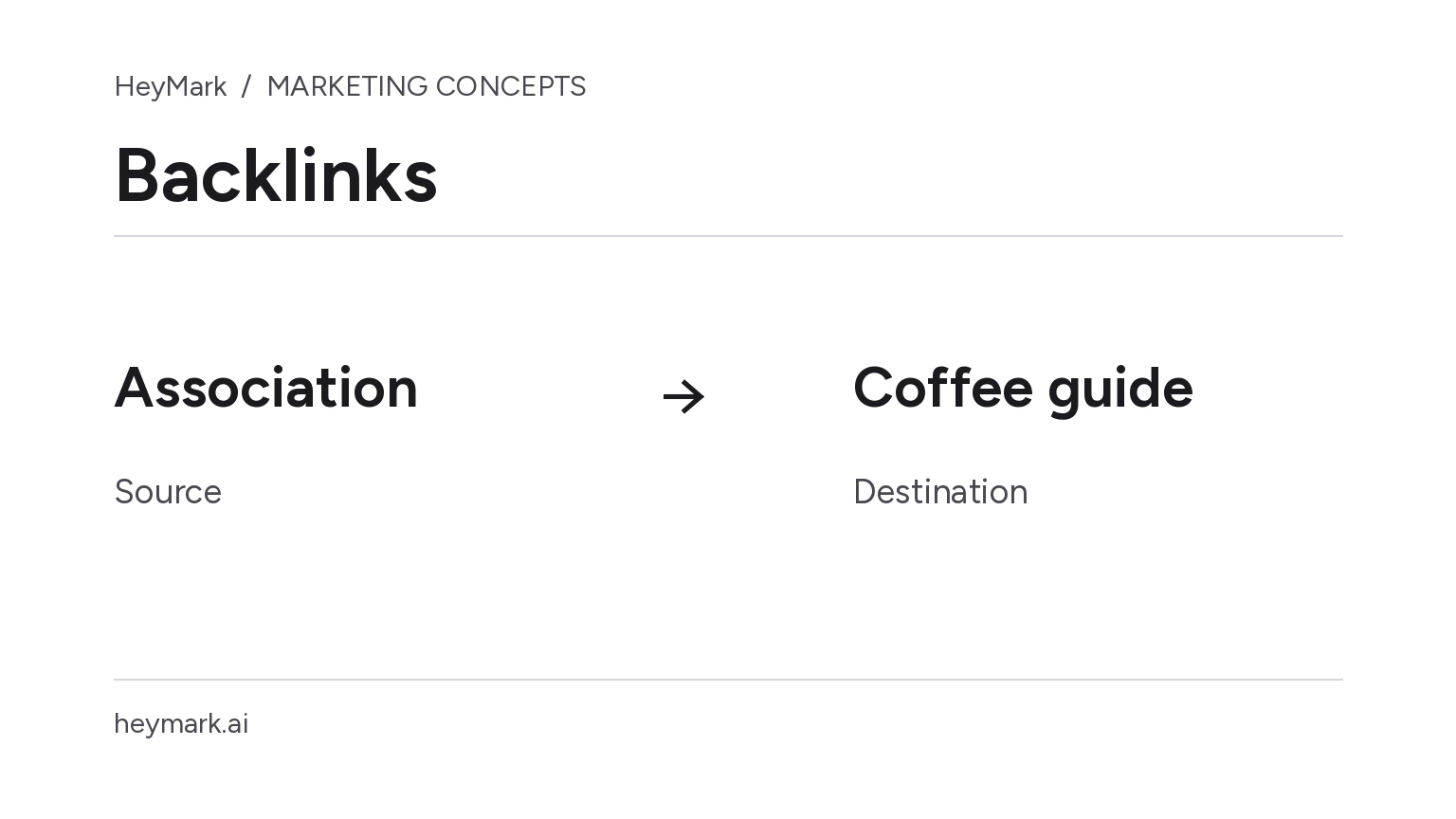
A backlink is a link from a page on another site to a page on your site. If a coffee association links from its resource directory to your guide on storing coffee, the association’s site is the source and your guide is the destination. The clickable words, called anchor text, should help readers understand what they will find.
Links can also help search engines discover pages and understand relationships between them. Google says it uses links as a signal when determining relevance and finding pages to crawl. That does not mean every link improves rankings, that a third-party metric is Google’s official score, or that a particular number guarantees results.
Assess a specific opportunity
Imagine you manage a clear guide to storing coffee. A trade association is preparing a resource for its members, and your guide could complement it. Before suggesting it, check that the resource is real, relevant to its readers, and maintained. If your guide includes advice you cannot support, update it first.
You could contact the association with a short, specific note: explain which part of its resource your guide could expand on, then let its team decide whether a link adds value. Do not send bulk messages or offer money for an editorial recommendation.
When reviewing a link, check four things: who publishes the page, which URL it points to, the surrounding context, and the anchor text. A link within a relevant resource list may make more sense to a reader than one inserted into an unrelated comment. Context helps you judge whether a reference is useful; by itself, it does not prove an effect on rankings.
Paid links and attributes
Google treats some practices intended to manipulate search results as spam, including link schemes that buy or sell links to influence rankings. When a link is paid or sponsored, identify that relationship using Google’s current guidance, preferably rel="sponsored", although Google also accepts nofollow for these links; for user-generated content, rel="ugc" may be appropriate. rel="nofollow" also tells Google the site does not want to associate with the destination in the usual way. These attributes describe the link relationship; they do not promise how a page will rank.
Focus on making something worth referencing and suggest it only to sites where it is genuinely relevant. Avoid buying backlink packages, automating placements, or treating a proprietary authority number as an official quality measurement. For another view of search visibility choices, read SEO vs SEM.
Sources
- Link best practices for Google: explains how Google processes links and why anchor text should provide context.
- Spam policies for Google Search: describes link schemes and other manipulative practices.
Plan your next post in HeyMark.
Keep the idea, review the draft with your team, and see how it performed in the accounts you connected.